276-386-6162

Complete Your Smile: Exploring Dentures and Bridges as Tooth Replacement Options
June 26, 2023
General Dentistry
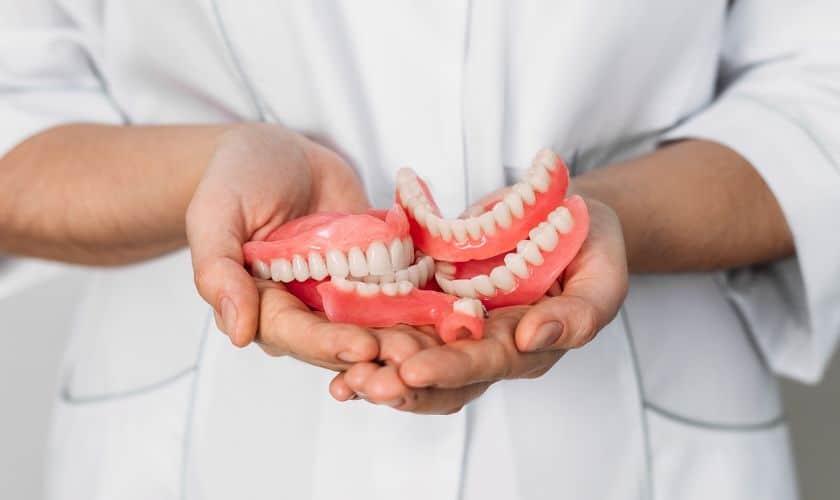
Losing one or more teeth can have a significant impact on your smile’s appearance and functionality. Fortunately, there are tooth replacement options available to help restore your complete smile. Dentures and bridges are popular choices for replacing missing teeth. In this blog, we will explore these two tooth replacement options, discussing their benefits, considerations, and helping you make an informed decision about which option may be right for you.
Dentures: An Overview
Dentures are removable appliances designed to replace missing teeth and surrounding tissues. They consist of artificial teeth set in a gum-colored base made of acrylic or a combination of acrylic and metal. Dentures can be either complete, replacing all teeth in an arch, or partial, filling in gaps where some teeth are missing.
Benefits of Dentures
Versatility: Dentures can replace multiple missing teeth, regardless of their location in the mouth.
Affordability: Dentures are often more cost-effective compared to other tooth replacement options.
Non-invasive: The process of getting dentures typically does not require any surgery or invasive procedures.
Types of Dentures
Complete Dentures: These are used when all teeth in an arch (upper or lower) need replacement. Complete dentures rest on the gums and are held in place by suction and sometimes denture adhesive.
Partial Dentures: Partial dentures are used when some natural teeth remain. They have a framework that attaches to the remaining teeth and includes artificial teeth to fill in the gaps.
Considerations with Dentures
Adjustments: Dentures may require periodic adjustments to ensure a comfortable fit as the gums and jawbone change over time.
Learning Curve: Getting used to wearing and speaking with dentures may take some time initially.
Maintenance: Proper denture care involves regular cleaning, overnight soaking, and avoiding certain foods that can damage the denture.
Bridges: An Overview
Dental bridges are fixed appliances used to replace one or more missing teeth. They consist of artificial teeth (pontics) held in place by dental crowns attached to the natural teeth adjacent to the gap. Bridges can be made from various materials, including porcelain, ceramic, or a combination of metal and porcelain.
Benefits of Bridges
Stability: Unlike dentures, bridges are fixed in place and do not require removal for cleaning or eating.
Natural Look and Feel: Bridges are designed to blend seamlessly with the surrounding teeth, providing a natural appearance and restoring chewing functionality.
Longevity: With proper care and regular dental visits, bridges can last for many years.
Types of Bridges
Traditional Bridges: The most common type, where the artificial teeth (pontics) are held in place by dental crowns on the adjacent teeth.
Cantilever Bridges: Used when there is only one adjacent tooth next to the gap.
Maryland Bridges: Also known as resin-bonded bridges, they use metal or porcelain wings bonded to the adjacent teeth with minimal preparation.
Considerations with Bridges
Preparation: The adjacent teeth need to be prepared by removing a small amount of enamel to accommodate the dental crowns.
Oral Hygiene: Proper oral hygiene practices, including regular brushing and flossing, are crucial to maintain the health of the supporting teeth and the bridge itself.
Suitability: The suitability of a dental bridge depends on the condition of the adjacent teeth and the health of the supporting structures.
The Bottom Line
Both dentures and bridges offer viable options for replacing missing teeth and restoring your complete smile. Dentures are versatile, affordable, and suitable for replacing multiple missing teeth, while bridges provide stability, a natural look, and long-term durability. Considerations such as adjustments, maintenance, learning curves, and the condition of adjacent teeth should be taken into account when deciding between dentures and bridges. To determine the most appropriate tooth replacement option for your unique needs, consult with a dental professional who can assess your oral health, discuss the pros and cons, and guide you toward the best solution for completing your smile.
Recent Post
May 14, 2026
Why Minor Tooth Pain Should Never Be Overlooked? A Gate City’s Dental Guide
May 8, 2026
Can’t Get a Same-Day Dental Appointment? Try These Urgent Alternatives

April 30, 2026
Family Dentist in Gate City: Complete Guide to Choosing the Best Care

April 24, 2026
Why Choosing an Emergency Dentist in Gate City Is Critical for Immediate Pain Relief

April 17, 2026
How a Trusted Dentist in Gate City Supports Long-Term Oral Health
Categories
General Dentistry (24)